Busway Products
High-Voltage Common-Enclosure Busway
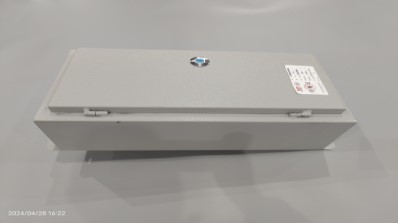
A busway plug-in box is used to tap power from a busway trunking system at a branch point. A socket fitting must first be fabricated on the busway trunk per the design before a plug-in box can be connected. A plug-in box mainly consists of three parts: the copper plug-in pins, the circuit breaker, and the cable interface.
A plug-in box is generally named after the circuit breaker's brand and current rating. Common brands include Schneider, Siemens, ABB, Chint, and Delixi; common current ratings include 60A, 80A, 100A, 125A, 160A, 200A, 225A, 250A, 315A, 400A, 500A, 630A, 800A, 1000A, 1250A, and 1600A. For current ratings of 800A and above, a busway T-tap connection is recommended instead.
Because no national standard specifies the exact process parameters for plug-in boxes, parameters can vary between manufacturers and are not interchangeable. As busway technology continues to advance, busway structures and conductor specifications keep changing, which causes the pin dimensions and phase arrangement of plug-in boxes to change quickly as well. As a result, plug-in boxes from different factories, eras, or production batches may have different technical parameters and cannot be used interchangeably. Since a plug-in box draws power through a precision plug-in connection, its pins must fit tightly against the busway conductors, or an inadequate contact surface can easily cause overheating. For this reason, plug-in boxes should whenever possible be sourced from the original busway manufacturer.
A plug-in box is generally named after the circuit breaker's brand and current rating. Common brands include Schneider, Siemens, ABB, Chint, and Delixi; common current ratings include 60A, 80A, 100A, 125A, 160A, 200A, 225A, 250A, 315A, 400A, 500A, 630A, 800A, 1000A, 1250A, and 1600A. For current ratings of 800A and above, a busway T-tap connection is recommended instead.
Because no national standard specifies the exact process parameters for plug-in boxes, parameters can vary between manufacturers and are not interchangeable. As busway technology continues to advance, busway structures and conductor specifications keep changing, which causes the pin dimensions and phase arrangement of plug-in boxes to change quickly as well. As a result, plug-in boxes from different factories, eras, or production batches may have different technical parameters and cannot be used interchangeably. Since a plug-in box draws power through a precision plug-in connection, its pins must fit tightly against the busway conductors, or an inadequate contact surface can easily cause overheating. For this reason, plug-in boxes should whenever possible be sourced from the original busway manufacturer.